 |
|||||
 |
|||||
 |
|||||
|
|||||
 |
HIERAKONPOLIS -- NEKHEN |
 |
|||
 |
|
||||
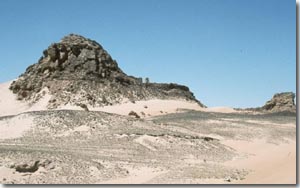
Hierakonpolis served as the cult center of the hawk god Horus of Nekhen. The kings built some of the most ancient temples in Egypt here and it retained its importance as the cult center of this divine royal patron long after it had otherwise declined. The original settlement on the site dates from the late Badarian or Naqada I. At its height around 3400 BC it had at least 5,000 and possibly as many as 10,000 inhabitants. The ruins of the city were originally excavated towards the end of the 19th century. In the "principal deposit" of the temple of Nekhen they found important ceremonial Predynastic artifacts such as the Narmer Palette and the famous macehead bearing the name of King Scorpion. More recently, a necropolis in the area has been further excavated by a multinational team of archaeologists, egyptologists, geologists, and other sciences. They have found the largest funerary complex yet dating from the earliest era of ancient Egypt, more than 5,000 years ago. Inside the tombs the archaeologists found a cow's head carved from
flint and the remains of seven people. They believe four of them were
buried alive as human sacrifices. The remains survived despite the fact
that the tombs were plundered in ancient times. The site contains some
of the earliest examples of mummification found in Egypt.
|
|||||
Home | Nile Valley | Dynasties | Wealth | Divinity | Temples | Hieroglyphs | Mysteries
|
|||||