 |
||||||
 |
||||||
 |
||||||
|
||||||
 |
ESNA -- LATOPOLIS |
 |
||||
 |
|
|||||
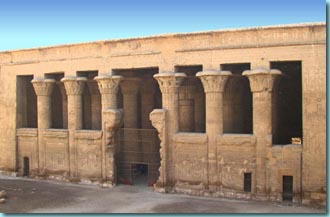
The main attraction here is the Temple of Khnum and Neith (above), which lies beneath street-level in a pit. Most of the ruins of this temple and the old city are yet to be explored since they lay under modern buildings.
|
||||||
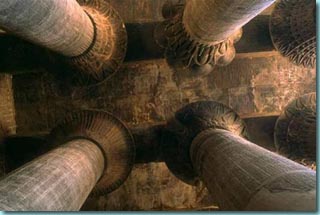
The first temple here was built by the New Kingdom pharaoh Thutmose III (15041450 BC). Additions were made in the Later Dynasties and Greco-Roman Periods. Near the Temple of Khnum & Neith on a stone quay along the corniche are carved hieroglyphic cartouches of Roman emperor Marcus Aurelius (161-180 AD). The Roman emperor Decius (249-251 AD) - who decreed that all Christians would suffer death if they did not sacrifice to the pagan gods - had his cartouche carved on the walls of the temple. His was the last. Later, Esna was an important Coptic Christian center with a beautiful monastery. |
 |
|||||
|
||||||