 |
||||||||||||||||||||
 |
||||||||||||||||||||
 |
||||||||||||||||||||
|
||||||||||||||||||||
 |
AGRICULTURE |
 |
||||||||||||||||||
More than anything else, the wealth of Egypt came from agriculture. Grain, vegetables, fruit, cattle, goats, pigs and fowl
were the true "Gifts of the Nile". The yearly
inundations provided rich, fertile soil. Produce and meat was grown
raised or caught, and taxed, stored or traded. The Egyptian agricultural
system, begun in Predynastic times, was maintained for thousands of
years. |
||||||||||||||||||||
|
|
|
|||||||||||||||||||
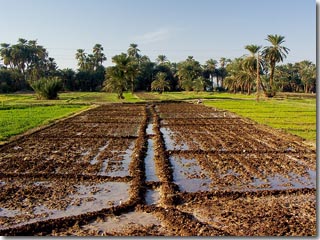
IRRIGATION During the inundation, they opened dams, flooding canals, dykes, catch basins and fields. When the water reached about 6 ft./1.5 m, the dams were closed and the water left to drain over the next few months. The waterlogged earth did not need much further irrigation (but higher lying fields did). The maintenance of dams and canals was done at local levels.
The involvement of the pharaonic administration in irrigation was probably
minimal. The responsibilities fell mostly to local nome
landowners. (However, the draining of the Faiyum, the opening and closing
of the canal sluices to Lake Moeris, and maintenance of the general
flow of the Nile became tasks for the central authorities from the Middle
Kingdom on). |
 |
|||||||||||||||||||
| The flood allowed a growing season from December to June, from above the 1st Cataract to the fringes of the Delta, along the banks and branches of the Nile. CROPS |
||||||||||||||||||||
 |
 |
 |
 |
|||||||||||||||||
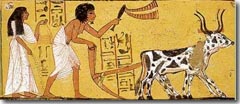
The Egyptians located gardens, orchards, and vineyards on high ground
away from the Nile flood plain. These had to be irrigated by hand with
the water drawn from wells or the river. They grew radishes, onions,
and cabbages as regular staples. Also grown were sesame, lentils, peas
and chickpeas, leeks, dill, grapes, melons and gourds. choriander, endive,
cucumbers, watermelons, melons and wild radishes. Lettuce was dedicated
to the god Min. The poor ate the roots of
papyrus, lotus and other plants gathered in the marshes. |
||||||||||||||||||||
 |
|
|||||||||||||||||||
GRAIN
HARVEST |
||||||||||||||||||||
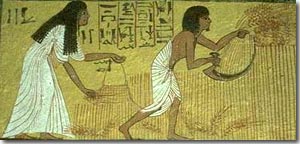
The harvest was a time of intense labor. Egyptians worked from sunrise to sunset, taking short breaks for food and drink. On the great estates overseers kept up the pace. The ears of wheat and barley were cut with flint sickles and left on the ground so the reapers didn't waste time bending over. Women followed them gathering the sheaves into baskets. These in turn were followed by the local poor, mostly women and children, trying to pick up any of the grain missed by the others. The stalks were left standing for the livestock. |
 |
|||||||||||||||||||
The grain was stored in silos, walled enclosures carefully plaster-coated on the inside and whitewashed outside. Workers climbed stairs to the top of the silo, dumping baskets of grain through a window. Grain could be taken out through a door at the bottom. Scribes scrupulously measured and recorded the harvest. Surveyors
measured the fields with measuring ropes, in order to calculate the
area and assess the quantity of grain owed as taxes. The state worked
to prevent disputes by keeping tight control over land distribution.
Fields were marked with boundary stones. These had to be replaced after
the inundation, based on cadastral records. |
||||||||||||||||||||
 |
|
|||||||||||||||||||
Originally on the floor, by the Middle Kingdom Egyptians put these grinding querns on platforms to make the work easier. This process certainly allowed rock grit into the flour, which caused extensive dental abrasion (Egyptians of all classes suffered from tooth decay and abscesses). GRAIN YIELDS About 4 to 5 million people lived in Egypt during the New Kingdom.
In a bad year the annual yield was less than 660 lbs (300 kg) per head,
maybe considerably less. Grain shortages were frequent, at least on
local levels. The most pessimistic estimates show sufficient grain only
every third year. Nevertheless, Egypt clearly had surpluses often enough
that they could fill state granaries and even export grain. During Roman
times Egypt was the principal bread baskets of Rome. |
||||||||||||||||||||
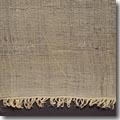
| FLAX AND LINEN Middle Eastern peoples grew and used flax at least since 4500 BC. But the ancient Egyptians prized it more than others. They rarely used wool in the hot weather, and cotton would not be discovered until Christian times (500s AD). They considered flax linen one of the greatest gifts of Hapi, the Nile. who "clothed them with the flax from his fields". Flax fibers are among the longest and strongest of the natural fibers. They get stronger when wet because of a high pectin content which acts like a glue in moist conditions. They dry quickly and resist decay better than most other natural fibers. |
 |
|||||||||||||||||||
The Egyptians spun and wove the fibers into linens of different varities and quality. The linen they produced could be exceedingly delicate. By 3000 BC the Egyptian weavers were capable of weaving the finest cloth with 162 warp threads and 122 weft threads per inch. By the end of the Old Kingdom, linen cloth was so fine it could be pulled through a ring. During Middle Kingdom times bolts of linen could be 5 to 6 feet wide. The quality of the cloth people wore was often remarked upon, as it
set apart the powerful from the humble. The cloth was often bleached
and sometimes dyed. It was generally sewn into sacklike kalasiris or
wrapped around the hips and worn like a kilt. |
||||||||||||||||||||
 |
|
|||||||||||||||||||
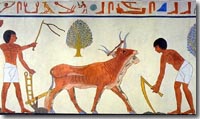
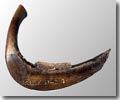
| These they tied to the horns of cattle or pulled themselves. Pigs, sheep and goats treaded the seeds into the ground and helped to husk the emmer wheat after harvest. But hard human labor did everything else. | ||||||||||||||||||||
Orchard and vinyard workers had specialized tools for pruning, trimming, and pollinating plants. |
 |
|||||||||||||||||||
The Nile provided the fertilizer and water except for higher elevations above the flood zone. The Egyptians used buckets until the 2nd Intermediate Period, when the shadouf was introduced. The shadouf consisted of a long pole with a bucket on one end and a counterweight on the other. This could raise a quart/liter of water 10 ft/3 m per second.
|
||||||||||||||||||||
Home | Nile Valley | Dynasties | Wealth | Divinity | Temples | Hieroglyphs | Mysteries
|
||||||||||||||||||||