 |
|||||
 |
|||||
 |
|||||
|
|||||
 |
AVARIS |
 |
|||
 |
|
||||
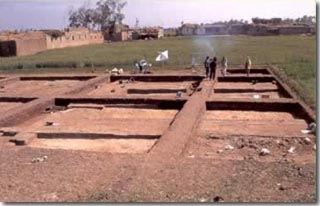
Avaris was captured by Ahmose (1539-1514 BC), who ended Hyksos rule and founded the New Kingdom and the splendid 18th Dynasty. Excavations here have uncovered a cemetery situated to the west of the main temple enclosure wall. Several strata of burials dating from the late 13th Dynasty to the very end of the Hyksos Period could be discerned. Three main types of burials were found: vaulted mud brick tombs set into pits, simple pit burials, and infant burials in large vessels of Egyptian and foreign origin. A remarkable feature is that most were undisturbed and therefore produced good material for further stratigraphical and chronological analysis. The most prominent tomb had a burial chamber and single vault constructed of mud-bricks. A single horse skeleton was found in the entrance area. Next to the northeastern wall a young female servant was buried in a slightly contracted position looking towards the tomb chamber. The body was placed in this position at the time of the main burial. Because of the circumstances of this and other burials of the period there is a strong possibility that the girl was offered to her master as a human sacrifice. The warrior was put into his tomb in a supine slightly contracted position with his head towards the entrance. On his left hand was found an amethyst scarab. He was buried with his weapons and an assemblage of different pottery types. Bones of goats or sheep placed on a dish next to his head are remains of a meat offering. He wore a copper belt with an attached dagger with five middle ribs on his left side. In his arms he held a scimitar still in its sheath. The copper sword was well preserved; the sheath, consisting of leather, the handle was made of bone. The blade is cast with a riveted socket, it's point voluted and therefore unique. It is the oldest specimen of this type yet found in Egypt.
|
|||||
Home | Nile Valley | Dynasties | Wealth | Divinity | Temples | Hieroglyphs | Mysteries
|
|||||