 |
|||||||
 |
|||||||
 |
|||||||
|
|||||||
 |
ABU SIMBEL |
 |
|||||
 |
|
||||||
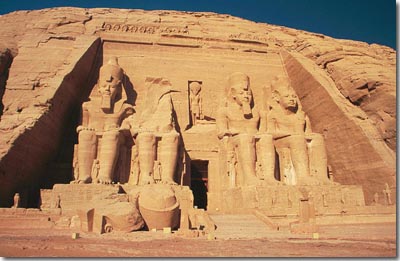
Each is over 67 ft/20 m high
although one has been damaged since ancient times. A statue of Ramesses
is seated with three other gods within the innermost part of the rock-cut
temple (the sanctuary). |
|||||||
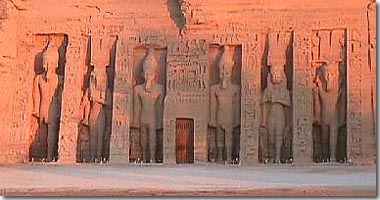
The Small Temple (right) was probably completed ahead of the Great Temple and is dedicated to Ramesses' favorite wife, Nefertari. At the entrance stand six 33 ft/10 m high rock-cut statues - two of Ramesses and one of Nefertari on either side of the doorway. The Great Temple of Ramesses is primarily dedicated to Ra, and that of Nefertari is dedicated to Hathor, Abu Simbel was first reported by J. L. Burckhardt in 1813, when he came over the mountain and saw the facade of the great temple. The temples became a must see for Victorians visiting Egypt. |
 |
||||||
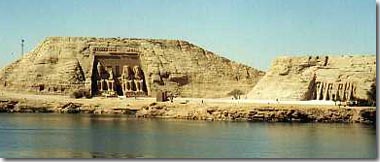
When the temples (176 mi/280
km from Aswan) were threatened by submersion in Lake Nasser, due to
the construction of the High Dam, the Egyptian Government secured the
support of UNESCO and launched a world wide appeal. During the salvage
operation which began in 1964 and continued until 1968, the two temples
were dismantled and raised over 196 ft/60 m up the sandstone cliff where
they had been built more than 3,000 years before. |
|||||||
 |
|
||||||
|
|||||||