MYSTERIES OF ANCIENT EGYPT

THE "FIRST TIME"

Horus Narmer - "Menes" - the Scorpion King

Who created Ancient Egypt? How and when? These are interesting and important questions when one considers that Ancient Egyptian civilization was not only one of the first on earth, but lasted more than three thousand years - over 60% of recorded human history!

There are two stories: one archeological/historical and one mythological.

The Greeks, relying on Egyptian priests, attributed the unification of Egypt to a first king named Menes. He was listed as the first pharaoh of the 1st Dynasty. Archeology tells us that a king named Narmer (possibly the one called "King Scorpion") of Upper Egypt conquered Lower Egypt and founded the Egyptian state.

'Menes' and 'Narmer' may be the same man. If so, his role in human history is thoroughly under-appreciated. He must have been a brilliant conqueror, ruler and administrator.

The state he created would last through periods of properity and poverty, order and chaos, dynasty after dynasty - for 30 centuries.

But according to the ancient Egyptians themselves, this Menes/Narmer followed a long list of gods and demi-gods who ruled before him. They were portrayed as superhuman figures, giants who towered above mortal men. (One is reminded of the biblical Nephilim, men of great size and strength, mentioned in Genesis 6:4 - "The Nephilim were on the earth then . . . the Sons of God . . . heroes of old, men of renown.")

As our knowledge of this early stage of Egyptian history grows, we are finding hints of powerful rulers living in Middle and Upper Egypt who were extending their influence, if not their realm, to the rest of Egypt. These rulers may correspond to the (mythical?) kings listed by the Egyptians - if not literally, then perhaps simply as confirmation that ancient Egyptian chroniclers knew of the existence of kings before Menes.


The Egyptian mythological explanation of the foundation of their state, however, does not begin with Menes, but ends with him. They speak of the Zep Tepi - the "First Time".

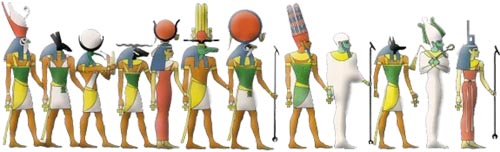
During this fabled First Time, the gods ruled in their country. The Egyptians said it was a golden age during which the waters of the abyss receded, the primordial darkness was banished, and humanity, emerging into the light, was offered the gifts of civilization. They spoke also of intermediaries between gods and men - the Urshu, a category of lesser divinities whose title meant 'the Watchers'. And they preserved particularly vivid recollections of the gods themselves, puissant and beautiful beings called the Neteru who lived on earth with humankind and exercised their sovereignty from Heliopolis and other sanctuaries up and down the Nile.

Some of these Neteru were male and some female but all possessed a range of supernatural powers which included the ability to appear, at will, as men or women, or as animals, birds, reptiles, trees or plants. Paradoxically, their words and deeds seem to have reflected human passions and preoccupations. Likewise, although they were portrayed as stronger and more intelligent than humans, it was believed that they could grow sick - or even die, or be killed - under certain circumstance.

The ancient Egyptians left records describing the First Time as actual historic period. The Neteru were actual people who were very advanced and came to the Nile valley from the south and proceeded to civilize and rule over the native peoples. They were survivors of disaster in their former home and sought safety and a new life in the Nile valley. It is they, according to the Egyptian records, who built the Great Sphinx and the Pyramid complex at Giza.


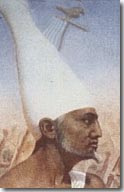
These rulers wore the white crown of Upper Egypt and were shown as superhuman figures, giants who towered above mortal men. They were depicted as war-like, which hints at the authoritarian nature of the Upper Egyptian rulers.

Both in the Turin King-list and with Manetho, this Menes follows a long list of gods and demi-gods who ruled before him. The first row on the Palermo Stone contains names of kings who allegedly ruled Egypt before him. As our knowledge of this early stage of Egyptian history evolves, we are finding sources that hint at powerful rulers living in Middle and Upper Egypt who already had extended their influence, if not their realm, to parts of Lower Egypt. This information may correspond to the mythical rulers in the Turin King-list and to the names listed in the first row of the Palermo Stone, if not literally, then perhaps simply as a confirmation that the Ancient Egyptian chroniclers were aware of the existence of kings before Menes. This has led some authors to propose that there may have been a Dynasty "0" before the 1st Dynasty. It is not certain that the kings placed in this hypothetical Dynasty "0" actually belonged to the same ruling family and to what extent they all ruled over the same area.

During the fabled First Time, Zep Tepi, when the gods ruled in their country, they said it was a golden age during which the waters of the abyss receded, the primordial darkness was banished, and humanity, emerging into the light, was offered the gifts of civilization. They spoke also of intermediaries between gods and men - the Urshu, a category of lesser divinities whose title meant 'the Watchers'. And they preserved particularly vivid recollections of the gods themselves, puissant and beautiful beings called the Neteru who lived on earth with humankind and exercised their sovereignty from Heliopolis and other sanctuaries up and down the Nile. Some of these Neteru were male and some female but all possessed a range of supernatural powers which included the ability to appear, at will, as men or women, or as animals, birds, reptiles, trees or plants. Paradoxically, their words and deeds seem to have reflected human passions and preoccupations. Likewise, although they were portrayed as stronger and more intelligent than humans, it was believed that they could grow sick - or even die, or be killed - under certain circumstance."

The ancient Egyptians left records describing the Zep Tepi as actual historic peoples who were very advanced and came to the Nile valley from the south and proceded to civilize and rule over the native peoples. This group of people known as Zep Tepis were survivors of disaster in their former home and sought safety and a new life in the Nile valley. It is they, according to the Egyptian records that built the Great Sphinx and the Pyramid complex at Giza.

- Graham Hancock - Fingerprints of the Gods

This has led some authors to propose that there may have been a Dynasty "0" before the 1st Dynasty. It is not certain that the kings placed in this hypothetical Dynasty "0" actually belonged to the same ruling family and to what extent they all ruled over the same area.