 |
||||||
 |
||||||
 |
||||||
|
 |
|
 |
|||
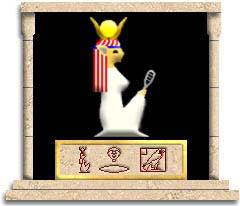
Translation -- "House of Horus" |
||||||
|
||||||
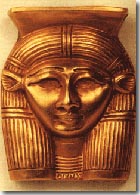
Hathor's temples, especially that at Dendera, were centers for both healing and midwifery, including on-site hospital-sanatoriums. Priests in the temple of Dendera conducted oracles with Hathor in ritual trances held in crypts underneath the sanctuary. Any person could sleep on the temple roof and hope for a dream, which would then be interpreted by the priests. Even today, one can see graffiti and game boards left behind by those pilgrims, carved into the stones of Dendera's roof. "Sistrum capitals" atop the pillars throughout Egyptian temples show Hathor's full face with cow's ears atop a naos-style column. Hathor was closely associated with Horus at Edfu, perhaps influenced by the fact that she was a patroness of Egypt's queens (as Horus was to the king, so Hathor was to the queen). Some queens even adopted Hathor's titles of "Mistress of Heaven" and "Lady of Gold." |
 |
|||||
| Nefertari's spectacular temple at Abu Simbel near Nubia depicts the queen as Hathor in many places and her husband Ramesses II is depicted in its sanctuary suckling from the udder of Hathor pictured as a divine cow. |
||||||