 |
|||||
 |
|||||
 |
|||||
|
|||||
 |
LUXOR |
 |
|||
 |
|
||||
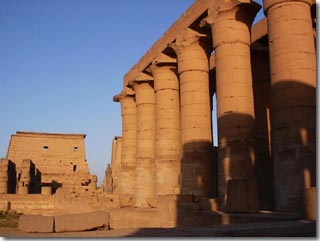
In front of them is one obelisk. Its companion was given to France and taken to Paris where it was erected on the Place de la Concorde in 1836, where it stands today. OPET FESTIVAL The festival's metaphysical purpose was to reconcile the human aspect of the pharaoh with his divine office. During the 18th Dynasty the festival lasted eleven days, but had grown to twenty-seven days by the reign of the 20th Dynasty Ramesses III (1184-1153 BC). At that time the festival included the distribution of over 11,000 loaves of bread, 850 cakes and 385 jars of beer. A procession of images of the current royal family began at Karnak and ended at the temple of Luxor. By the late 18th Dynasty the journey was made by gilded barges on the Nile River. Each god or goddess was carried in a separate barge that was towed by smaller boats. Large crowds of soldiers, dancers, musicians and high ranking officials accompanied the flotilla by walking along the banks of the river. During the procession the common people were allowed to ask favors of the statues of the kings and images of the gods floating by. Once at the temple, the king and his priests arrived to a thunderous greeting from thousands of Egyptians, then entered the back chambers. There, the king and his ka (the divine essence of each king, created at birth) were merged, and the king 'transformed' into a divinity. The crowd outside anxiously awaited the transformed king, and greeted his re-emergence with another tumultous roar. This completed the religous portion of the ritual. The Pharaoh of Egypt had become a god. Revelry ensued. The Opet Festival was the backbone of a pharaoh's government, providing legal and spiritual legitimacy to the ruler of Egypt. It confirmed an established pharaoh, and gave strengthened authority to a usurper or one outside the dynastic bloodline. Just south of the temple is the Old Winter Palace Hotel - used early this century by Lord Carnarvon as work proceeded on West Bank excavations and preliminary work on the tomb of Tutankhamun.
|
|||||
Home | Nile Valley | Dynasties | Wealth | Divinity | Temples | Hieroglyphs | Mysteries
|
|||||