 |
||||||
 |
||||||
 |
||||||
|
||||||
 |
PHILAE |
 |
||||
 |
|
|||||
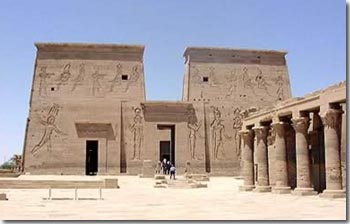
Construction of the main temple,
dedicated to Isis, was undertaken by Ptolemy II Philadelphus (282-246
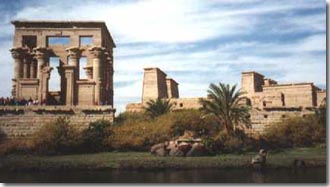
BC) of the Ptolemaic Dynasty. Other shrines include the Vestibule (above)
of 30th Dynasty Nectanebo I (380-362 BC) which is used as the entrance
to the island, the Temple of the Roman emperor Hadrian (117-138 AD),
the Temple of Hathor, the Kiosk of Roman
emperor Trajan (98-117 AD) and other temples and pylons. |
||||||
Philae was one of the last strongholds of the ancient Egyptian religion. it continued to flourish here into the 500s AD. When the temples were finally closed by the Byzantine emperor Justinian in 535 AD, it ended 4,000 years of worship of the Netjeru, the ancient gods of Egypt. The Victorian world of the 1800s fell in love with the romantic setting of Philae. Philae is also a superb example of threatened cultural heritage being saved in the face of modern civilization's march to change the environment. The island of Philae and its temples came under threat with the construction of the Aswan High Dam in the 1960s. |
 |
|||||
The Dam at the First Cataract caused backed-up flood waters of the Nile to lap around the feet of the temples. They were destined to disappear forever beneath the river's waters. Fortunately, Philae was saved from drowning. In 1977, a coffer dam was constructed around the temples and the water was pumped out. Then the temples were carefully dismantled with every block assigned a number and its position noted. A nearby higher island called Agilkai was modified to resemble Philae and the temples were resembled in a beautiful setting which has been landscaped to match its original site. In 1980, Philae was once again opened to the public. Rumors were spread in the beginning of the 6th century AD that this maginificent temple served to worship the devil through human sacrifice. Its closing by force of arms in 535/537 A.D. meant the definite end of the Ancient Egyptian civilisation |
||||||
Home | Nile Valley | Dynasties | Wealth | Divinity | Temples | Hieroglyphs | Mysteries
|
||||||